

BYD’s Atto 3 was one of the first premium Chinese electric SUVs to make a significant impact in India, bringing a compelling combination of range, features, and competitive pricing to a market hungry for more EV options beyond Tata and MG. Now with over a year of Indian market presence, the BYD Atto 3 has built a small but loyal owner community. We evaluate whether it remains worth buying in 2026 against a significantly more competitive EV market.
Quick Specifications
| Specification | Details |
|---|---|
| Battery Type | Blade LFP Battery |
| Battery Capacity | 60.5 kWh |
| ARAI Range | 521 km |
| Real-World Range | 380–430 km |
| Motor Power | 204 bhp |
| Torque | 310 Nm |
| Drive Type | FWD |
| DC Charging Speed | 88 kW |
| Charge Time (0–80% DC) | ~50 min |
| Ground Clearance | 175 mm |
| Boot Space | 440 litres |
| Seating | 5 |
| Ex-showroom Price | ₹33.99 lakh |
Design & Exterior
The BYD Atto 3 sports a distinctive design that blends Chinese contemporary styling with international appeal. The full-width LED light bar at the front creates a modern, futuristic presence, and the floating roof design with a chrome surround gives it a premium appearance. Unique to the Atto 3 are sporty body character lines reminiscent of guitar string shapes — a design detail that stands out.
18-inch alloy wheels look proportional, and the aerodynamic body contributes to the Atto 3’s impressive efficiency. Available in five colours: Boulder Grey, Ski White, Surf Blue, Vivid Yellow, and the popular Cinnabar Red. The 175 mm ground clearance is a limitation for Indian roads with speed bumps.
Interior & Cabin Technology
The Atto 3 interior takes inspiration from its guitar/music theme design language — storage pockets shaped like guitar frets, elastic-band storage elements, and uniquely shaped ambient lighting. It is different, and most owners find it charming rather than gimmicky after the initial novelty wears off.
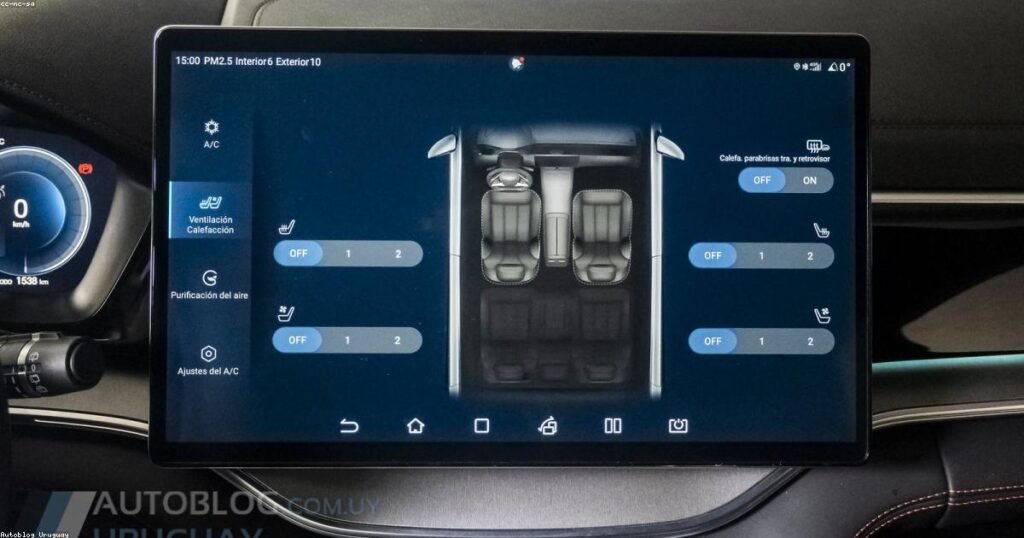
The 12.8-inch rotating touchscreen is the centrepiece — it pivots between portrait and landscape orientations via a button press. While initially attention-grabbing, most owners leave it in portrait mode permanently. The screen is responsive, runs BYD’s DiLink OS, and supports wireless Apple CarPlay and Android Auto. A 12-speaker Dirac sound system delivers impressive audio quality.
Battery & Range: BYD Blade Advantage
The Atto 3’s Blade LFP (Lithium Iron Phosphate) battery is BYD’s crown jewel technology. Unlike NMC batteries, LFP chemistry offers inherent thermal stability — it does not require the aggressive cooling that NMC batteries need in India’s hot climate. This translates to lower degradation over time and better performance in Indian temperature extremes.
ARAI claims 521 km; real-world Indian city driving yields 380–430 km, which is genuinely class-leading for its price. Even at 120 km/h highway speeds, the Atto 3 delivers 320–360 km — enabling single-charge Mumbai–Pune–Solapur trips with appropriate planning.
Charging Infrastructure & Speed
The Atto 3 supports CCS2 DC charging at up to 88 kW, providing 0–80% in approximately 50 minutes. AC charging at 11 kW provides a full overnight charge in approximately 7 hours. BYD has partnered with Tata Power, ChargeZone, and EESL networks for public charging compatibility.
The 88 kW DC charging speed is adequate but not cutting-edge — newer competitors like the Hyundai Creta Electric and Mahindra BE 6 offer faster charging. For daily use with home charging, this limitation is academic.
Performance & Driving Experience
204 bhp and 310 Nm delivers the characteristic EV surge from standstill. The 0–100 km/h in 7.3 seconds feels brisk, and the Atto 3 handles highway overtaking with confidence. Three driving modes (Eco, Normal, Sport) adjust throttle response meaningfully. Regenerative braking has four levels and is well-calibrated for Indian city stop-go traffic.
Ride & Handling
Ride quality is comfortable with a compliance-tuned suspension that absorbs most Indian road irregularities well. Body roll is controlled for an SUV, and highway stability is solid. The 175 mm ground clearance requires care on steep speed bumps — approach at an angle where possible.
Safety Features
6 airbags, ABS with EBD, ESC, Hill Start and Descent Control, 360-degree camera, and rear parking sensors are standard. The Blade battery’s inherent fire safety — it does not propagate thermal runaway — is a genuine safety advantage over conventional lithium batteries. ADAS features include forward collision warning, lane departure warning, and automatic emergency braking.
Price & Running Costs
| Variant | Ex-Showroom Price |
|---|---|
| BYD Atto 3 (Single Variant) | ₹33.99 lakh |
Running cost: approximately ₹1.0–1.3 per km on home charging. Annual savings versus a comparable petrol SUV: approximately ₹1.5–2 lakh for 20,000 km/year drivers. Blade battery warranty: 8 years/150,000 km.
Pros & Cons
| Pros | Cons |
|---|---|
| Blade LFP battery — safest chemistry | 175mm ground clearance — low for India |
| 380–430 km real-world range | 88 kW DC charging — slower than newer rivals |
| Unique, premium interior design | BYD service network limited outside metros |
| 8-year battery warranty | Single variant only — limited choice |
| 12-speaker Dirac audio — class-leading | No AWD option |
Verdict
The BYD Atto 3 remains a strong EV choice at ₹33.99 lakh — the Blade LFP battery’s safety, longevity, and 380–430 km real-world range are genuine competitive advantages. The interior is distinctive and premium, and the Dirac audio system is among the best available at its price point.
In 2026, the Atto 3 faces stiffer competition from the Hyundai Creta Electric, Tata Harrier EV, and MG Windsor EV. Against these, the Atto 3’s weaker service network and slower charging are relative disadvantages. But for buyers who prioritise battery technology, range, and unique styling, the Atto 3 remains a compelling choice. Best for: Range-prioritising EV buyers in metros who want proven LFP battery technology and premium audio/interior features.
