

The BYD Seal is China’s answer to the Tesla Model 3, and its arrival in India marks an important moment for the Indian premium EV segment. Priced between ₹41 lakh and ₹53 lakh, the Seal enters territory dominated by imported luxury brands, but it brings with it BYD’s world-class blade battery technology, CTB (Cell-to-Body) platform integration, and a genuinely impressive performance envelope. We tested the Seal extensively on Indian roads to determine whether it can justify its premium pricing for the Indian executive car buyer.
Quick Specifications
| Specification | Details |
|---|---|
| Battery Capacity | 82.56 kWh (AWD) / 61.44 kWh (RWD) |
| ARAI Range | 650 km (RWD) / 580 km (AWD) |
| Real-World Range | 490–530 km (RWD) / 440–470 km (AWD) |
| Motor Power | 390 kW / 523 bhp (AWD) |
| Torque | 670 Nm (AWD) |
| Drive Type | RWD / AWD |
| AC Charging | 11 kW |
| DC Fast Charging | 150 kW |
| Charge Time (10–80%) | ~30 min (150 kW DC) |
| Boot Space | 400 litres + frunk |
| Seating | 5 |
| Ex-showroom Price (Delhi) | ₹41.00 lakh – ₹53.00 lakh |
Design & Exterior
The BYD Seal wears a fastback sedan body styled by Wolfgang Egger, the designer responsible for some of Audi’s most celebrated shapes. The result is a car that looks genuinely expensive: a low, flowing roofline, flush door handles, frameless doors, and an aggressive front fascia with a split-level headlight arrangement. At 4,800 mm in length, it is a full-size sedan that commands presence. The ocean-inspired design language — BYD calls it “Ocean Aesthetics” — is evident in the wave-like body creases and the flowing rear spoiler integrated seamlessly into the boot lid. Available in five colours including a stunning Atlantis Grey, the Seal consistently attracted double-takes during our road test.
Interior & Cabin Technology
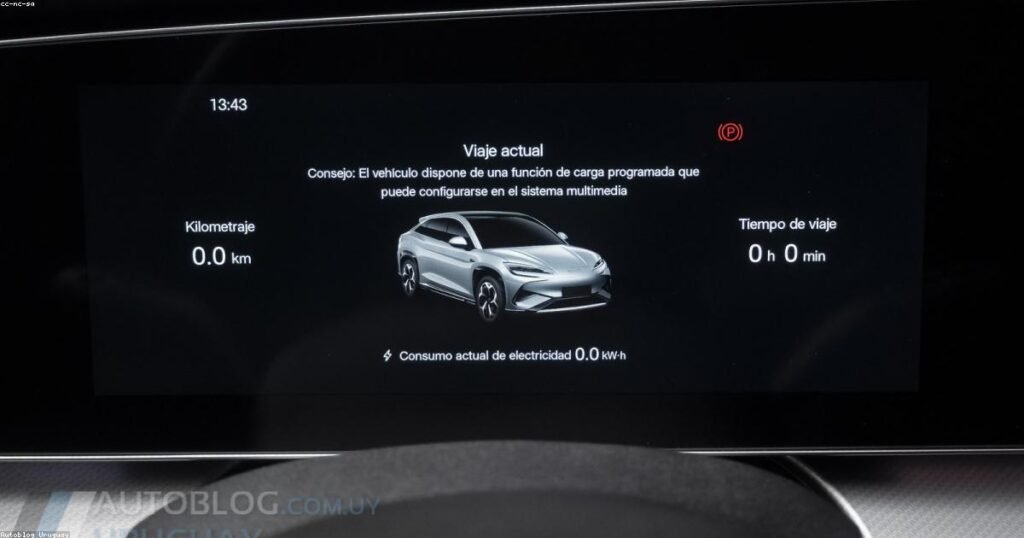
Inside, the Seal’s cabin is dominated by a 15.6-inch rotating touchscreen that can pivot between landscape (driving) and portrait (park) modes — a party trick that impresses every passenger. The screen is fast, responsive, and runs BYD’s DiLink 4.0 system with Android-based software that supports over-the-air updates. The instrument cluster is a fully digital 10.25-inch display. Interior materials are premium — real leather, ambient lighting with 128 colour options, a Dynaudio sound system, and soft-touch surfaces throughout. The rear cabin is spacious for a fastback sedan, and the panoramic glass roof floods the cabin with light. BYD’s in-car air purification system — a legacy feature from its COVID-era products — includes an N95-grade cabin filter, which is genuinely useful during Indian winters in Delhi NCR.
Battery & Range
BYD’s proprietary Blade Battery technology underpins both variants of the Seal. The technology arranges LFP (lithium iron phosphate) cells in long flat stacks that integrate structurally into the CTB chassis — improving rigidity while increasing energy density. In real-world testing, the RWD 61.44 kWh variant delivered 6.8 km/kWh in city conditions and 6.1 km/kWh on the highway — translating to 418 km and 374 km respectively. The AWD 82.56 kWh variant consumed more power but delivered 5.7 km/kWh at highway speeds, giving approximately 470 km. Battery degradation rates for BYD’s Blade LFP chemistry have been shown to be exceptionally low in third-party studies, making long-term ownership economics compelling.
Charging Infrastructure & Speed
The Seal supports 150 kW DC fast charging, enabling a 10–80% charge in approximately 30 minutes. BYD has partnered with ChargeZone and Tata Power to provide DC fast charging across India’s major expressway corridors. The 11 kW AC home charger provides a full charge from 20% in approximately 8 hours. One practical note for Indian buyers: BYD offers a dedicated service team for charger installation through its dealership network, which simplifies the home charging setup process. In cities like Delhi, Mumbai, and Bengaluru, the Seal’s fast charging capability means that a planned 20-minute coffee break at a highway charger can add approximately 200 km of range.
Performance & Driving Experience
The AWD Seal’s performance is genuinely shocking for an Indian road. 0–100 km/h in 3.8 seconds places it among the fastest production sedans available in India at any price. The power delivery is explosive, yet the car maintains composure through a sophisticated torque vectoring system that distributes power between front and rear axles based on traction conditions. Three driving modes — Eco, Normal, Sport — plus a Snow mode are available. The Sport mode transforms the Seal into a proper performance car, with throttle response sharpened and the adaptive suspension firmened. The eDSC (Electric Dynamic Stability Control) manages oversteer in tight corners confidently. The RWD variant is more serene and better for everyday Indian road use — the AWD’s performance is addictive but perhaps excessive for typical Mumbai or Delhi traffic.
Ride & Handling
The Seal rides on a sophisticated five-link rear suspension — rare at this price point — that delivers exceptional ride quality and handling balance. Ride comfort is genuinely world-class: the car flows over broken Indian roads with a refinement that rivals cars costing twice as much. Body roll is extremely well controlled, and the car changes direction with a precision and enthusiasm unusual for a large sedan. The optional acoustic glass significantly reduces road and wind noise, creating a serene cabin environment even at 120 km/h. The electric power steering is well-calibrated, though purists may find it slightly numb at the limit.
Safety Features
The BYD Seal has earned a 5-star Euro NCAP rating. Safety equipment includes 8 airbags, adaptive cruise control with stop-and-go, lane centring assist, blind spot monitoring, rear cross-traffic alert, autonomous emergency braking, and 360-degree camera. BYD’s Blade Battery inherently resists thermal runaway — a critical safety advantage in India’s hot climate. The CTB structure reinforces the body with the battery pack itself, improving structural integrity in side impacts. Intelligent Vehicle Emergency Stop is included, which detects driver incapacitation and safely brings the car to a halt.
Price, Variants & Running Costs
| Variant | Drive | Ex-showroom (Delhi) |
|---|---|---|
| Dynamic | RWD (61 kWh) | ₹41.00 lakh |
| Premium | RWD (61 kWh) | ₹45.00 lakh |
| Performance | AWD (82.56 kWh) | ₹53.00 lakh |
Running cost at ₹8/unit: approximately ₹1.18/km (RWD). Compared to a BMW 3 Series petrol at ₹12/km, annual savings for 15,000 km can exceed ₹1.6 lakh. Battery warranty is 8 years / unlimited km.
Pros & Cons
| Pros | Cons |
|---|---|
| Stunning performance (AWD 3.8s 0–100) | Brand perception vs European rivals |
| Blade Battery safety & longevity | After-sales network still expanding |
| 500 km+ real-world range | Boot reduced by fastback design |
| World-class ride quality | Large size can be awkward in tight city parking |
| 150 kW fast charging | RWD rear wheel spin in wet conditions |
| Rotating touchscreen | Higher import duties affect pricing |
Verdict
The BYD Seal is an extraordinary achievement: a premium electric sedan that legitimately outperforms European rivals costing significantly more, backed by industry-leading battery technology and impressive real-world range. For Indian buyers considering a BMW 3 Series or Mercedes-Benz C-Class, the Seal deserves serious evaluation. Its main challenge is brand perception and a still-developing BYD service network in India. For early adopters confident in the technology and the brand’s commitment to India, the Seal is an outstanding value proposition that may well represent the future of the premium sedan segment.
